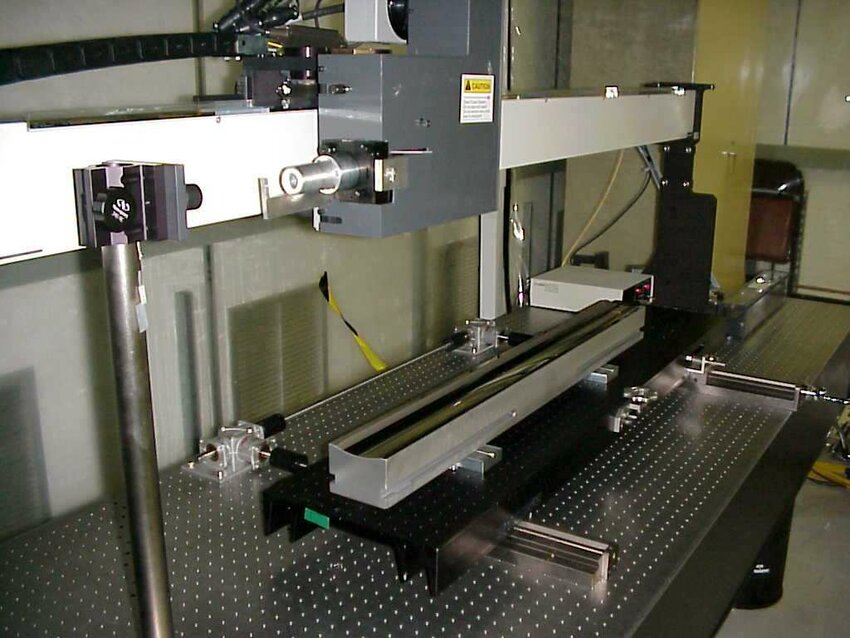
A vacuum system is a critical component in many scientific and industrial applications. Whether in research laboratories, semiconductor manufacturing, or material science experiments, maintaining precise control over the environment inside a vacuum chamber is essential. One device that plays a crucial role in improving the efficiency and functionality of these systems is the linear vacuum feedthrough. This article will explore how a linear vacuum feedthrough contributes to better vacuum system performance, its applications, and the advantages it offers.
Understanding Linear Vacuum Feedthrough
A linear vacuum feedthrough is a mechanical device designed to transfer motion into a vacuum chamber without breaking the vacuum seal. It allows linear movement, which means moving parts in a straight line, while maintaining the integrity of the vacuum. This device is essential when operators need to adjust, manipulate, or position equipment inside a vacuum environment without opening the chamber, which could compromise the vacuum conditions. The linear vacuum feedthrough is typically made of high-quality materials such as stainless steel and uses advanced sealing techniques to prevent leaks.
Maintaining Vacuum Integrity
One of the main challenges in vacuum systems is preventing leaks while allowing external control over internal components. A linear vacuum feedthrough ensures that motion can be transmitted into the chamber without disrupting the vacuum. Its sealing mechanisms, often involving O-rings or bellows, create a tight barrier that keeps air and other contaminants out. By preserving vacuum integrity, the linear vacuum feedthrough helps maintain consistent pressure and environmental conditions inside the chamber, which is critical for sensitive experiments or processes.
Enhancing Precision and Control
Another significant advantage of using a linear vacuum feedthrough is the increased precision and control it offers. Many experiments or manufacturing processes inside a vacuum chamber require exact positioning of tools or samples. The linear motion provided by the feedthrough allows operators to move components smoothly and accurately. This precision improves the quality of results, whether it is in coating thin films, performing scientific measurements, or adjusting instruments. Without a reliable linear vacuum feedthrough, achieving the necessary accuracy inside a vacuum environment would be far more difficult.
Reducing Downtime and Maintenance
Vacuum systems often require regular maintenance and adjustments, which can be time-consuming if the chamber has to be opened frequently. By using a linear vacuum feedthrough, operators can make necessary adjustments externally, reducing the need to break the vacuum. This not only saves time but also minimizes the risk of contamination and wear on sensitive components. The result is a more efficient system with less downtime and lower maintenance costs, which is particularly valuable in high-precision industrial applications.
Supporting Versatile Applications
Linear vacuum feedthroughs are versatile and can be used in various applications across multiple industries. In semiconductor manufacturing, they are used to position wafers accurately inside vacuum chambers. In research laboratories, they assist in manipulating experimental samples without disturbing the controlled environment. In coating and deposition processes, linear vacuum feedthroughs enable precise adjustments of tools and substrates. Their versatility makes them an essential component for any application where controlled motion inside a vacuum is required.
Conclusion
A linear vacuum feedthrough is more than just a mechanical component; it is a critical tool for enhancing the performance of vacuum systems. By maintaining vacuum integrity, providing precise motion control, reducing downtime, and supporting diverse applications, it ensures that vacuum systems operate efficiently and reliably. For anyone working with vacuum technology, incorporating a linear vacuum feedthrough can significantly improve both the accuracy and the productivity of their processes, making it an indispensable part of modern vacuum systems.