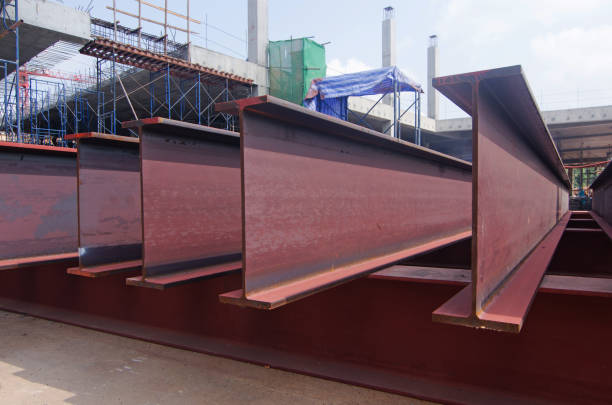
H Beam Sizes Explained in a More Chill, Human Way
Sometimes I feel like steel beams are like those gym bros who look scary at first but are actually super helpful once you get to know them. And among them, H beams are basically the wide-shouldered, super stable ones. They show up in construction sites, bridges, warehouses… kinda everywhere, just minding their own business and holding up half the world.I’ve spent a bit of time poking around the whole h beam sizes topic, mostly because I once mistook an H beam for an I beam and got schooled by a contractor who looked like he eats steel for breakfast. So now I make sure I actually understand this stuff. And honestly, it’s not as complicated as people think.
Also, if you ever want a deep dive into the actual product catalog, you can check h beam sizes on h beam sizes — that’s the page this whole piece is kind of connected to, so I’ll slip it in naturally whenever needed.
What Even Are H Beams?
Think of an H beam like a person standing with their feet firmly apart. Broad. Balanced. Confidence. The flanges are wider, giving it that chunky look, while the web in the middle does the heavy lifting. They’re built for strength in all directions, which is probably why they’re used in places where you don’t want anything wobbling.
When I first saw one up close, it reminded me of those old-school metal toy train tracks — solid, no nonsense. But with real-world scale, of course.
People on construction subreddits keep arguing about which is better: H beams or I beams. It’s one of those debates where everyone’s an expert suddenly. But the general vibe is that H beams have better strength and load distribution because of that width.
How H Beam Sizes Are Actually Classified
This is the part that used to confuse me. I always imagined beam sizing would be like shoe sizes — some standard number everyone understood. Nope.
H beam sizes are usually written like 150 x 150 x 7 x 10 or 200 x 100 x 5.5 x 8. At first glance it looks like someone leaked their bank OTP by mistake. But once you break it down, it’s surprisingly logical.
The first numbers are about dimension. Height and flange width. The last numbers are thickness. And suddenly things start making sense. A thicker web means better vertical strength. A wider flange means better horizontal stability.
If you need actual real-world sizes, again, the h beam sizes page has the typical range manufacturers in India use.
Why the Size Matters More Than You Think
A lot of beginners ask: “Why can’t you just pick a random beam that looks big enough?” That’s the same energy as measuring cooking salt with your heart — works with pasta, not skyscrapers.
The load, the span, the type of structure, vibration, wind… so many things depend on the right H beam size. Using a smaller beam than needed is like trying to carry all your grocery bags in one hand — you can do it, but one wrong move and things get ugly.
Lesser-Known Stuff People Rarely Talk About
Here’s something I found interesting: the manufacturing tolerances for H beams in India differ slightly across mills. Not dramatically, but by 1–2 mm sometimes. And while that sounds tiny, in steelwork, it’s like that one millimeter gap between a perfectly fitted door and one that keeps making that annoying scraping sound every time you close it.
Another underrated fact — wider flange H beams often make welding easier because the welder has more workable surface area. I actually saw a comment on a welding forum where a guy said “H beams are my comfort beams.” I didn’t know welders had comfort in anything, but hey, live and learn.
Where These Different Sizes Are Typically Used
If you ever walk into a warehouse with those tall racks reaching the ceiling, chances are the vertical supports are large H beams. Smaller ones end up in residential structures, mezzanine floors, farm sheds — basically anywhere you don’t need truck-level load.
The huge monsters you see in metro station construction? Yup. Oversized H beams doing all the heavy lifting. It’s funny how something so essential is barely noticed by most people. Meanwhile we’ll notice if our phone lags for two seconds. Humans are weird.
So, How Do You Pick the Right Size?
I’m not going to pretend you can eyeball it. Engineers run actual numbers — bending moment, shear force, and all that math’s I personally escaped after class 12. But most suppliers keep standard sizes ready in stock, and for everything else, structural engineers decide the final call.
If you’re browsing online, a simple bookmark-worthy place is the h beam sizes listing. It gives a clear idea of what’s commonly available and the weight per meter, which honestly is something people underestimate. Steel is heavy… like, seriously heavy. One wrong estimate and your transportation cost shoots up faster than onion prices in monsoon.
Final Thoughts
There’s something oddly satisfying about understanding how these silent giants work. H beams don’t scream for attention, don’t get fancy designs, don’t trend on social media — they just quietly make sure your building doesn’t collapse. Kinda like that one friend who always shows up with the right tools.